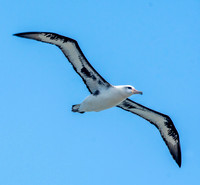
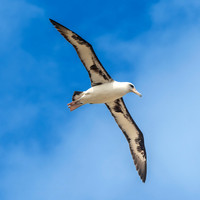
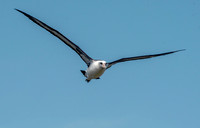
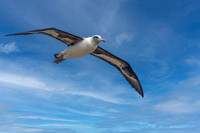
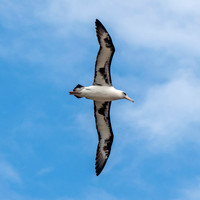
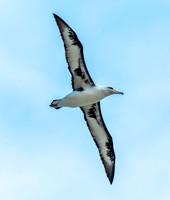
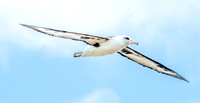
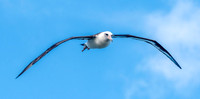
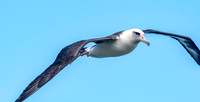
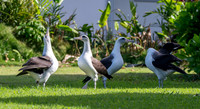
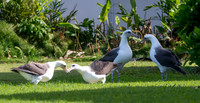
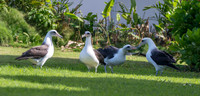
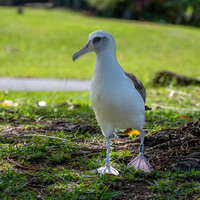
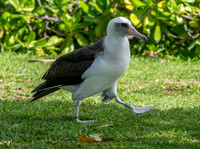
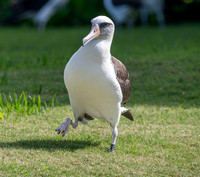
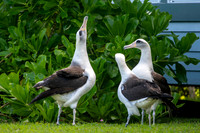
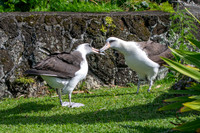
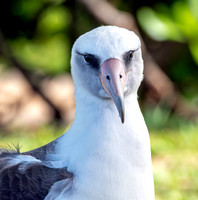
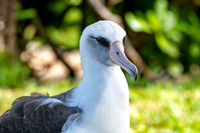
The Laysan albatross (Phoebastria immutabilis) gets its name from Laysan Island, an atoll located in the North-western Hawaiian Islands which remains one of the primary, high-density nesting colonies for the species. Up to 3 million albatrosses return to specific breeding grounds in the Northwestern Hawaiian Islands – Midway Atoll is the largest albatross colony in the world. These birds can travel millions of miles in their lifetime while sleeping on the wing. Laysan albatrosses are monogamous. To find a life partner, they perform complex, ritualized courtship dances involving bill-clacking, bowing, and sky-pointing that can take years to perfect. Young, unpaired albatrosses gather in large groups called "parties" to dance with multiple potential partners until they find a match. The dance consists of dozens of highly specific, ritualized movements that must be perfectly timed and mirrored between the pair. The physical steps are accompanied by a loud soundtrack of whines, moans, clacks, and cow-like braying sounds. The dance ensures that both birds are perfectly compatible and committed, as a mismatched pair would fail to raise a chick in the harsh ocean environment. Once the bond is formed, established pairs use only short, simplified greetings when they reunite each breeding season.
Princeville, Kauai is one of the only residential areas in the world where wild Laysan Albatrosses (mōlī) choose to safely nest, raise their chicks, and perform elaborate mating rituals directly alongside humans. Rather than being displaced by human development, these giant seabirds have actively adopted the manicured front lawns, backyard gardens, and golf courses of this north shore resort community as a seasonal breeding haven.
See also: Albatross, Salvin's albatross, Wandering albatross, White-capped albatross.