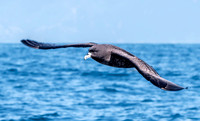
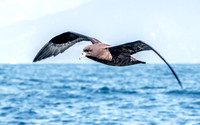
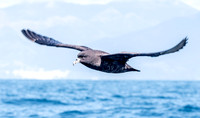
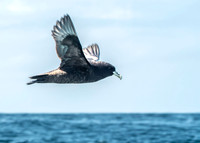
The white-chinned petrel (Procellaria aequinoctialis) gets its common name from a distinctive patch of white feathering located directly beneath the bird's lower mandible. This patch varies in size and can be very small or completely absent in birds from the Eastern Pacific and New Zealand. Mariners and locals also historically called the bird the Cape hen (due to early specimens being collected near the Cape of Good Hope) and the Shoemaker – because of the strange, repetitive, sawing or clicking vocalisations they make during nighttime flock gatherings and courtship call. The word Petrel derives from Saint Peter and the biblical story of him walking on water. Unlike many surface-feeding seabirds, white-chinned petrels can plunge down to depths of up to 15 meters (approx. 50 feet) to grab fish, krill, crustaceans, and squid. Its range is broadly across Southern Hemisphere oceans, stretching as far north as southern Australia, the Humboldt Current off Peru, and the Benguela Current off Namibia. South Georgia has the largest population –around 2,000,000 pairs.
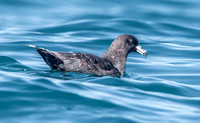
© BirdsImageStock