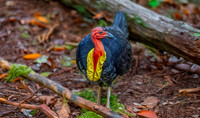
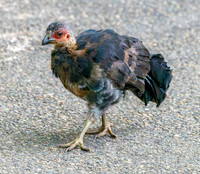
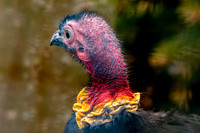
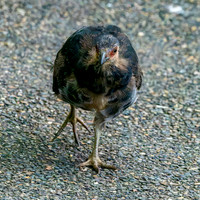
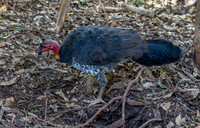
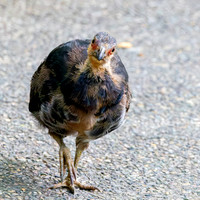
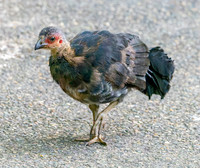
Australian brush-turkey (Alectura lathami) was named by European biologists and settlers who noted the bird’s preference for dense brush. Settlers named it a "turkey" due to its superficial physical resemblance to the American turkey – though it is not a true turkey. The species name lathami honors Dr. John Latham, a prominent English ornithologist who provided early descriptions of Australian birds in the 1820s. Ironically, Latham originally misidentified the bird as the "New Holland Vulture" because of its bald red head before the error was later corrected. It is a large mound-building bird of the family Megapodiidae, which literally translates from Greek as big foot (mega + pode)—a reference to the large, powerful feet they use to scrape up massive incubation mounds. Also known as the bush turkey, scrub turkey, or just brushturkey, it is found in eastern Australia, ranging from Far North Queensland to the south coast of New South Wales, and has also been introduced to Kangaroo Island in South Australia. Its closest relatives are the wattled brushturkey, Waigeo brushturkey, and malleefowl.
© BirdsImageStock