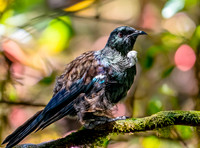
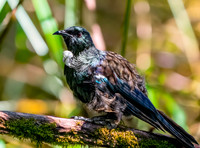
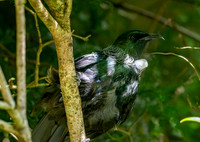
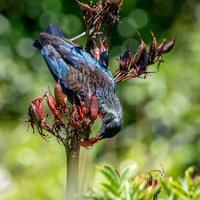
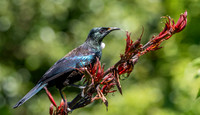
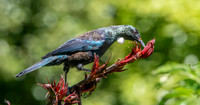
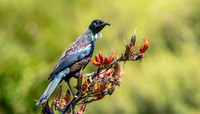
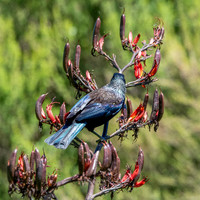
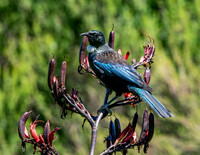
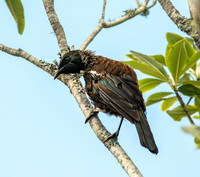
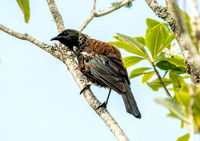
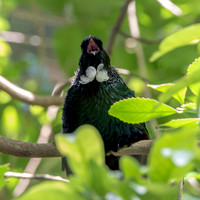
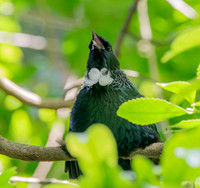
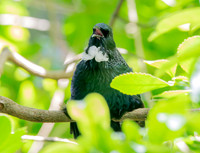
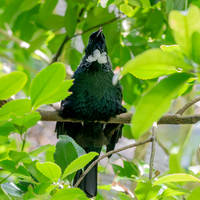
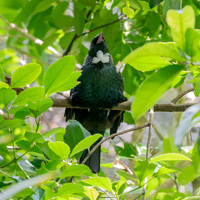
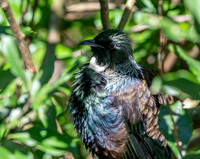
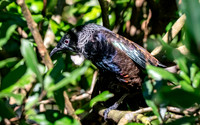
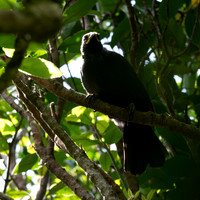
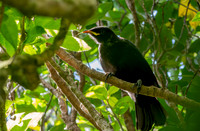
Endemic to New Zealand, the Tūī (Prosthemadera novaeseelandiae) was named by Māoris after the bird's distinctive, melodic melodic call. Maoris also called it kōkō. European settlers originally called it the "parson bird" due to the distinctive tuft of white throat feathers that resembled a cleric's collar. Tūīs have a unique voice box setup that lets them sing two completely different musical notes at the exact same time, as well as being able to replicate car alarms, phone ringtones, and human speech. Tūī are widespread and locally abundant on the North, South and Stewart Islands, and their offshore islands. They love feeding on the nectar of flax flowers, which can ferment in the sun; after eating it, tūī have been spotted flying in a clumsy, wobbly way as if they are drunk. Tūī are one of the largest species in the honeyeater family. Juveniles can be identified by the corners of the mouth which show a bright yellowish gape. These shrink and turns black as the bird matures.
© BirdsImageStock