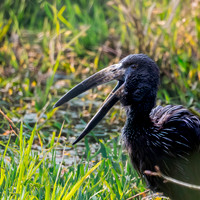
The mandibles of The African Openbill stork (Anastomus lamelligerus) do not meet except at the tip - hence the name openbill. That gap is specifically designed to remove molluscs from their shells. It produces bill-clatters during the displays, as most of Ciconiidae species do. It also gives loud croaks and honks. Its adult plumage is generally dark overall, with glossy green, brown, and purple on the mantle and breast. African Openbills can be found feeding singly or in large groups over 7,000. The African openbill stork's habitat is primarily freshwater wetlands, including marshes, swamps, and the margins of lakes and rivers across sub-Saharan Africa,
where they mostly eat aquatic invertebrates such as snails and bivalves. They will also eat frogs, crabs, worms, fish and insects.