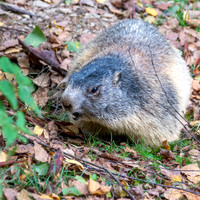
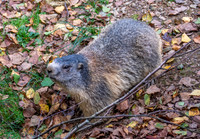
The alpine marmot (Marmota marmota) is a large ground-dwelling squirrel, which was reintroduced in the Pyrenees in 1948. An animal of Pleistocene cold steppe, it was - and is - exquisitely adapted to this ice-age climate, so it is an excellent digger, able to penetrate soil that even a pickaxe would have difficulty with, and spend up to nine months per year in hibernation. Its coat is a mixture of blonde, reddish and dark grey fur. While most of the alpine marmot's fingers have claws, its thumbs have nails. Known for its distinctive burrows and piercing whistles, the marmot plays a significant role in the alpine ecosystem. The burrows aerate the soil, facilitating plant growth and nutrient cycling. Its grazing habits influence vegetation composition, thereby impacting the overall biodiversity of alpine meadows. Alpine marmots live in burrows in family groups of about 15-20 individuals throughout the Alps, Pyrenees and Carpathian Mountains. Marmots are the largest mammals to undergo true hibernation – around 200 days per year. In late September, Alpine marmots block their burrow's side tunnels to cut draughts. They start to hibernate when the temperature inside falls to about 12°C, usually in October, waking in the spring.