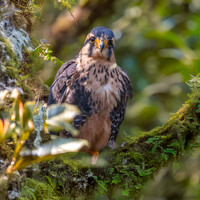
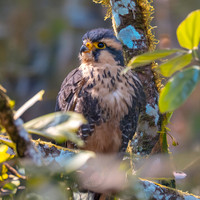
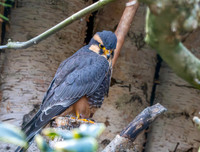
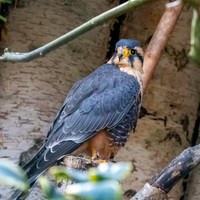
The aplomado falcon (Falco femoralis) name is derived from the Spanish word aplomado which means lead-coloured or plumbeous, which refers to the blue-grey plumage on its back and wings. The Andean Aplomado falcon (Falco femoralis pichinchae) is a subspecies of the Aplomado falcon. They frequently hunt in pairs or family groups, a rare behaviour among most falcon species. This teamwork significantly increases their hunting success rate, which is more than double that of solo hunts. They are versatile predators that not only catch birds in midair with impressive agility but are also adept at chasing down small mammals and lizards on foot on the ground. They also practice kleptoparasitism, meaning they will pirate food from other raptors or birds by harassing them until they drop their catch. The Andean Aplomado falcon is specifically adapted to open landscapes with scattered trees or shrubs for nesting and perching. It is distributed throughout the Andean region from southwestern Colombia south to central Chile and northwestern Argentina. Its primary habitat consists of high-elevation grasslands (altiplano) and temperate grasslands.
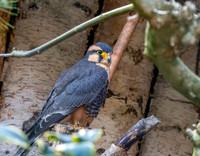
© BirdsImageStock