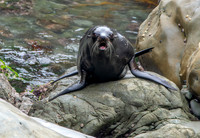
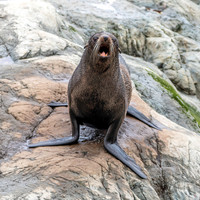
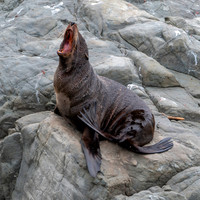
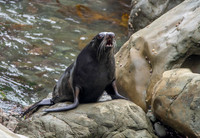
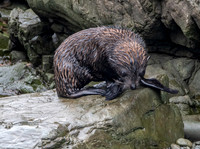
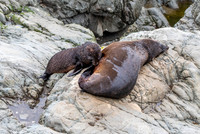
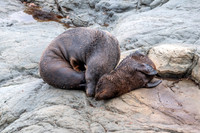
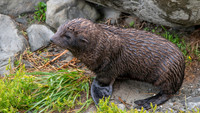
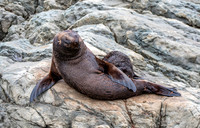
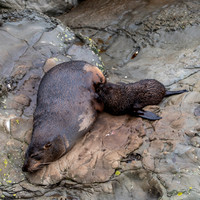
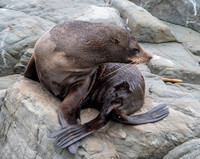
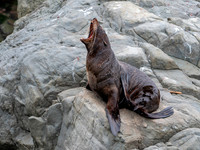
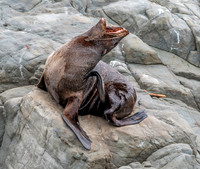
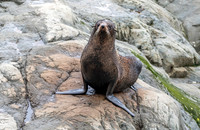
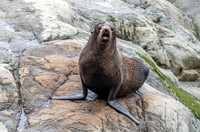
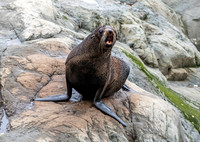
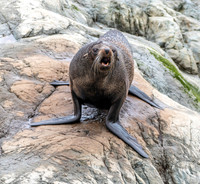
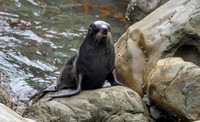
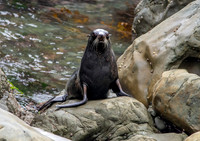
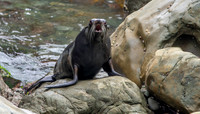
The New Zealand fur seal (Arctocephalus forsteri) has dense, thick underfur which once made them a prime target for commercial sealing. It is known as kekeno in the Māori language and as the long-nosed fur seal in Australia. They are eared seals (family Otariidae), not true seals which means they have visible external ear flaps (pinnae), unlike "true" or earless seals (like leopard seals or elephant seals), which only have tiny internal ear holes. They have a special spongy blood-filled tissue (cavernous tissue). When they dive deep into the water, this tissue swells with blood to equalize pressure and protect the ear from collapsing. Because blood has a density very similar to water, this specialized tissue also lets sound waves travel smoothly straight to the inner ear underwater (losing less than 1% of the sound signal compared to 99% if the ear canal stayed full of air). These fur seals can rotate their hind flippers forward to walk on all fours. They have a pointed nose, long pale whiskers, and a double-layered coat of dark grey-brown fur that looks almost black when wet. They prefer rugged, rocky shorelines and exposed coasts around New Zealand, its subantarctic islands, and southern Australia.
© BirdsImageStock