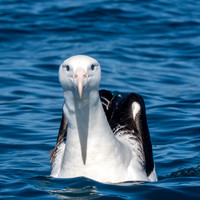
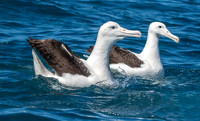
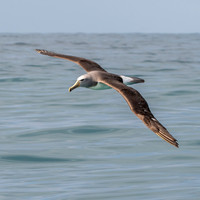
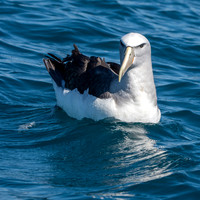
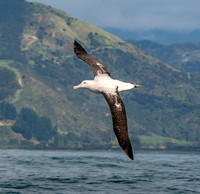
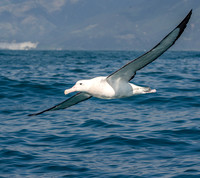
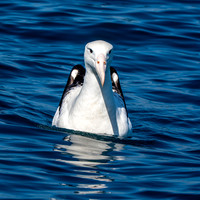
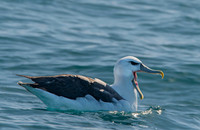
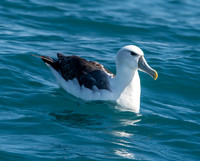
Albatrosses are the world's largest flying seabirds, famed for gliding thousands of miles over the open ocean with minimal effort. Albatross derives from the Arabic word al-câdous or al-ġaţţās (meaning "the diver" or pelican). It travelled through Portuguese sailors as alcatraz and was eventually adapted into English. They possess massive wingspans, mate for life with elaborate dances, and can survive out at sea for years on end without ever touching land. Albatrosses mate for life. When reuniting at their breeding colonies, couples perform long, complex, and unique courtship dances that help strengthen their lifelong bond. Scientists generally recognise 22 species of albatross, divided into four main genera: the great albatrosses (Diomedea), the mollymawks (Thalassarche), the North Pacific albatrosses (Phoebastria), and the sooty albatrosses (Phoebetria). Albatrosses can travel thousands of miles without a single flap of their wings. They have a built-in tendon locking mechanism in their shoulders that keeps their wings rigidly extended so they can sleep and fly simultaneously while riding ocean winds. Albatrosses can drink ocean water – they extract the excess salt from their bloodstream using specialised glands located right above their eyes.
See also: Laysan albatross, Salvin's albatross, Wandering albatross, White-capped albatross.
See also: Laysan albatross, Salvin's albatross, Wandering albatross, White-capped albatross.
© BirdsImageStock