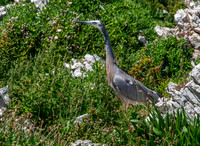
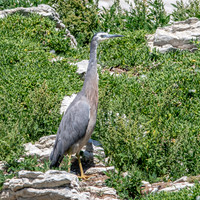
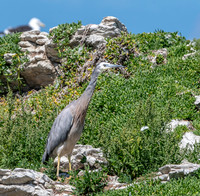
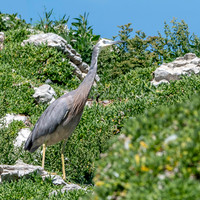
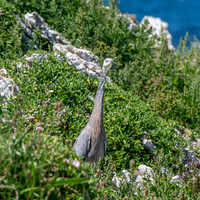
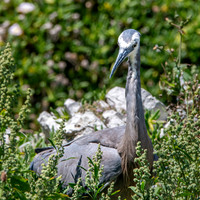
The name white-faced heron (Egretta novaehollandiae) comes from its distinct physical appearance—a pale blue-grey bird with a prominent white face and throat. It is also historically known as the white-fronted heron due to the white markings on its forehead and face. Novaehollandiae is Latin for "of New Holland," which was the historical European name for Australia, where the species was formally described. Found across Australia, New Zealand, New Guinea, and parts of Southeast Asia, it thrives in both coastal wetlands and suburban pastures. Despite its common name, it is taxonomically an egret. Once a rare vagrant across the Tasman Sea, the species established itself in New Zealand in the 1940s. Because it arrived naturally without human help, it is legally classed as a native species in New Zealand and is now the country's most common heron.





© BirdsImageStock