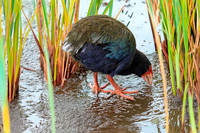
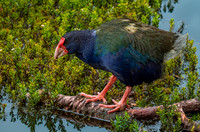
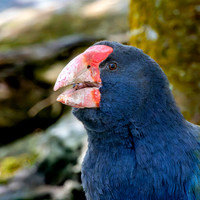
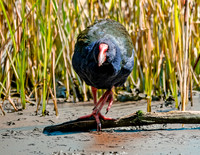
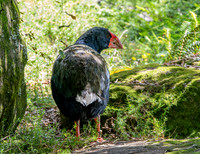
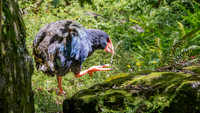
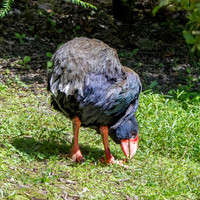
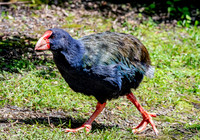
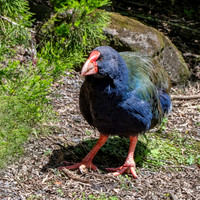
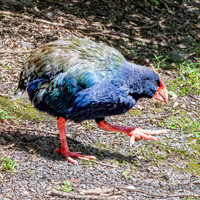
The prehistoric-looking takahē (Porphyrio hochstetteri) is a rare, heavy-bodied flightless bird endemic to New Zealand that was famously rediscovered in 1948 after being presumed extinct for 50 years - there are now around 500. The name comes from the Māori verb takahi, which translates to "stamp" or "trample" due to their heavy, distinctive stride. The largest living member of the rail family, they have wings but cannot fly – they are only used to stretch, display dominance, or signal aggression during courtship. Breeding pairs are monogamous, remaining loyal for life and sharing incubation and chick-rearing duties.
© BirdsImageStock