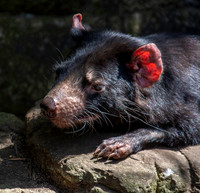
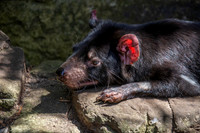
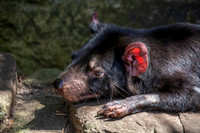
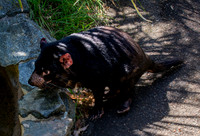
Native only to the Australian island of Tasmania, the Tasmanian devil (Sarcophilus harrisii) got its common name from early European settlers who were terrified by the animal's unearthly, piercing night-time screams and aggressive feeding habits. When these settlers investigated the spine-chilling noises echoing from the Australian bush, they discovered a dark, dog-like creature with wide jaws, sharp teeth, and ears that flushed bright red when agitated. This fierce display led them to believe the animal was an evil spirit or a demonic entity, thus naming it "The Devil". When confronted or feeling stressed, devils will flash a massive, ferocious-looking yawn which is actually a defence mechanism triggered by anxiety rather than a sign of aggression. Its scientific name Sarcophilus, comes from Greek and translates to "flesh-lover". The second part, harrisii, honours George Harris, the English naturalist who first described the animal in 1807. The world's largest surviving carnivorous marsupials, they have the strongest bite-for-size of any land mammal in the world.
© BirdsImageStock