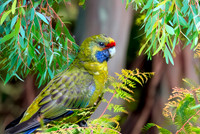
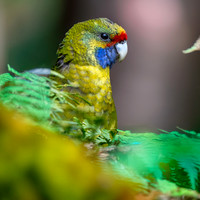
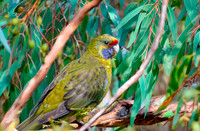
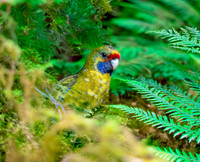
The green rosella or Tasmanian rosella (Platycercus caledonicus) scientific name, caledonicus, was assigned by the German naturalist Johann Friedrich Gmelin in 1788 under the mistaken assumption the specimen had come from New Caledonia, an island in the south-west Pacific. The specimen had actually been collected in Adventure Bay, Tasmania, during Captain James Cook's third voyage in 1777, but the location records were mixed up. Caledonicus is the Latin word for Scottish, which added to the confusion for later naturalists trying to understand the name for a bird endemic to Tasmania. Rosella" is a shortened version of "Rosehill parrot" or "Rosehiller," the name early European settlers gave to a common parrot species (the eastern rosella) first encountered at Rose Hill (now Parramatta) in New South Wales. It is found in the forests, woodlands, scrublands, and even urban and agricultural areas like gardens and orchards of Tasmania and nearby islands in the Bass Strait.
© BirdsImageStock